

Office Property Layout Trends Report: Texas Markets (2025/2026)
The office landscape across Texas’s major markets—Dallas, Houston, Austin, and San Antonio—has undergone a dramatic transformation from the pre-COVID era (2016–2019) to the present day. This evolution has been driven by a convergence of hybrid work models, rising space efficiency needs, employee well-being, and sustainability imperatives. Drawing on insights from top architectural and design firms such as Gensler, BOKA Powell, and Goree Architects, this report examines shifting trends in office density, furniture configuration, and workspace types, positioning Texas at the forefront of innovative office design.
Key Take-Aways & The Forward Outlook
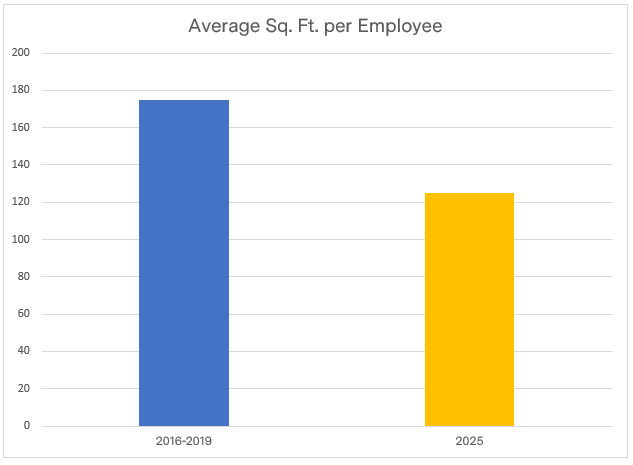
Texas’s office environments are evolving from rigid, status-based structures to dynamic, team-oriented ecosystems. The ~10% increase in density reflects broader spatial efficiency strategies enabled by hybrid work. Modular, tech-integrated furniture and hybrid layouts are now standard, while private offices continue to recede in prominence. Over the next few years (2026–2028), the state’s major metros will likely lead in adopting AI-driven space planning, adaptive furnishings, and wellness-centered designs. These innovations, tailored to regional business cultures and climate realities, will position Texas at the forefront of the next generation of office environments.
Density & Workstation Configuration
2016–2019 (Pre-COVID)
- Layout Characteristics: Offices predominantly featured fixed workstations, traditional cubicles, and private offices for senior leadership. Typical density ranged between 150–200 square feet per employee. Team clusters existed but were static, lacking reconfigurability.
- Texas Market Context:
- Dallas and Houston: Strong presence of private offices and traditional layouts, especially in legal, finance, and energy sectors.
- Austin: More progressive layouts led by the tech sector—embracing open plans and benching systems.
- San Antonio: Maintained conservative design patterns with a mix of cubicles and closed offices
2025 (Current Trends)
- Increased Density: Average square footage per employee has dropped to 100–150 SF, reflecting a ~10% increase in density, enabled by hybrid scheduling and flexible seating strategies.
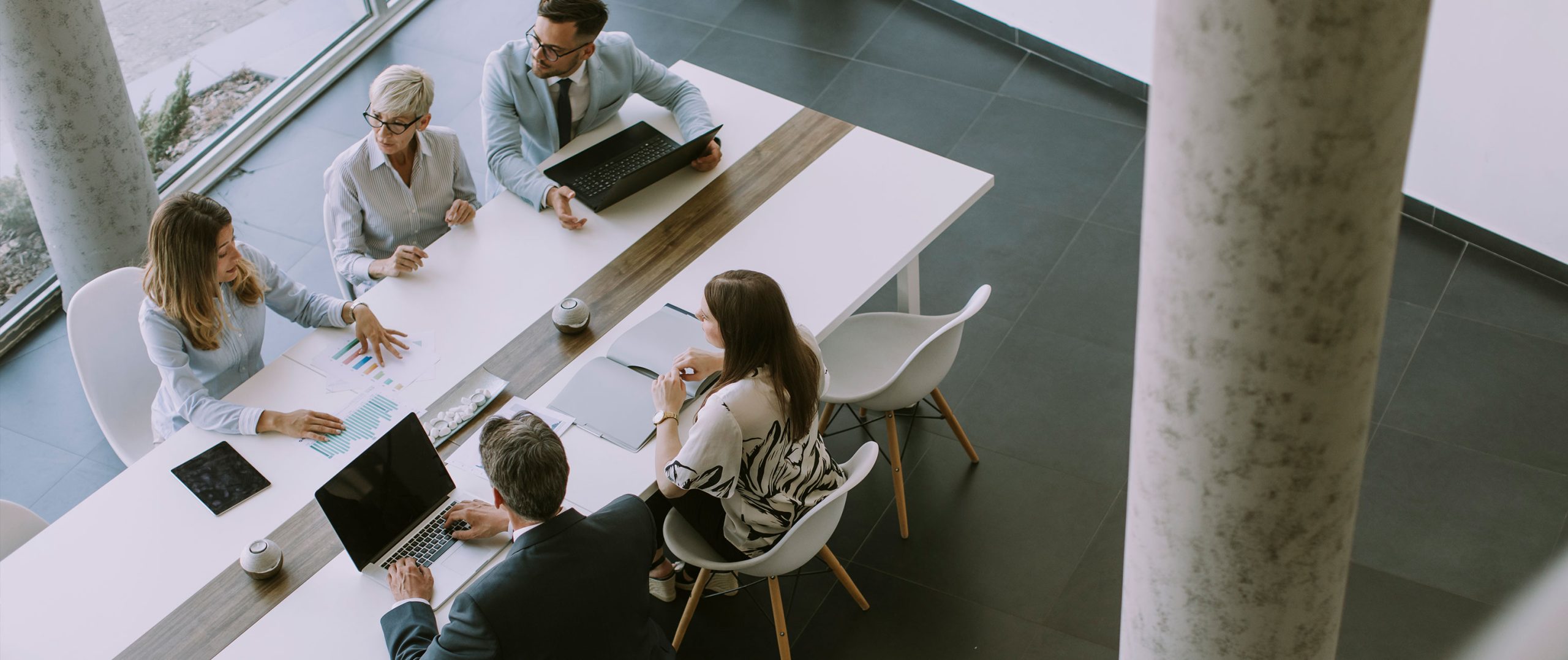
- Team-Based Clustering: Workstations are increasingly organized around project teams. These modular clusters allow teams to sit together temporarily, fostering agility and collaboration while supporting social distancing when needed.
- Hotdesking & Tech-Enabled Booking: Many offices now rely on digital reservation systems and IoT occupancy sensors. In Dallas and Austin, these systems have become almost standard for companies to better managing hybrid workforces.
- Activity-Based Working (ABW): Layouts now include dedicated areas for different work modes—focus zones, collaborative “huddle” areas, private phone booths, and tech-enabled Zoom rooms.
2026–2028 (Outlook)
- Smart Space Optimization: Expect AI-powered workplace analytics to dynamically adjust space layouts, redirect traffic flow, and auto-suggest team placement based on usage trends.
- Dynamic Walls & Mobile Zones: Emerging technologies like robotic partitions and flexible floor systems will allow instant reconfiguration of work zones—particularly valuable in space-constrained urban markets like Austin and Uptown Dallas.
Furniture & Space Configuration
2016–2019 (Pre-COVID)
- Standardization: Furniture was uniform, fixed, and task-specific—cubicles, standard desks, and conference rooms. Modularity and ergonomic flexibility were limited.
- Regional Preferences:
- Houston: Preferred heavy-duty, private office furniture, especially in legacy energy firms.
- Austin: Early adoption of collaborative furniture and open benching systems.
- Dallas/San Antonio: Largely conventional but with some progressive experimentation in creative industries.
2025 (Current Trends)
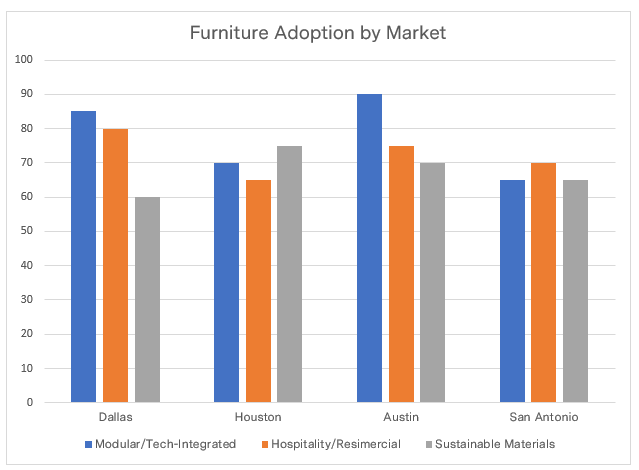
- Modular & Mobile Furniture: Desks and chairs are now designed to move. Writable surfaces, mobile whiteboards, and rolling partitions enable fluid collaboration. Stackable seating and convertible furniture maximize utility in tight spaces.
- Tech-Integrated Spaces: Furniture now supports built-in power, USB access, and wireless charging. Meeting rooms include plug-and-play connectivity, especially in tech-centric spaces.
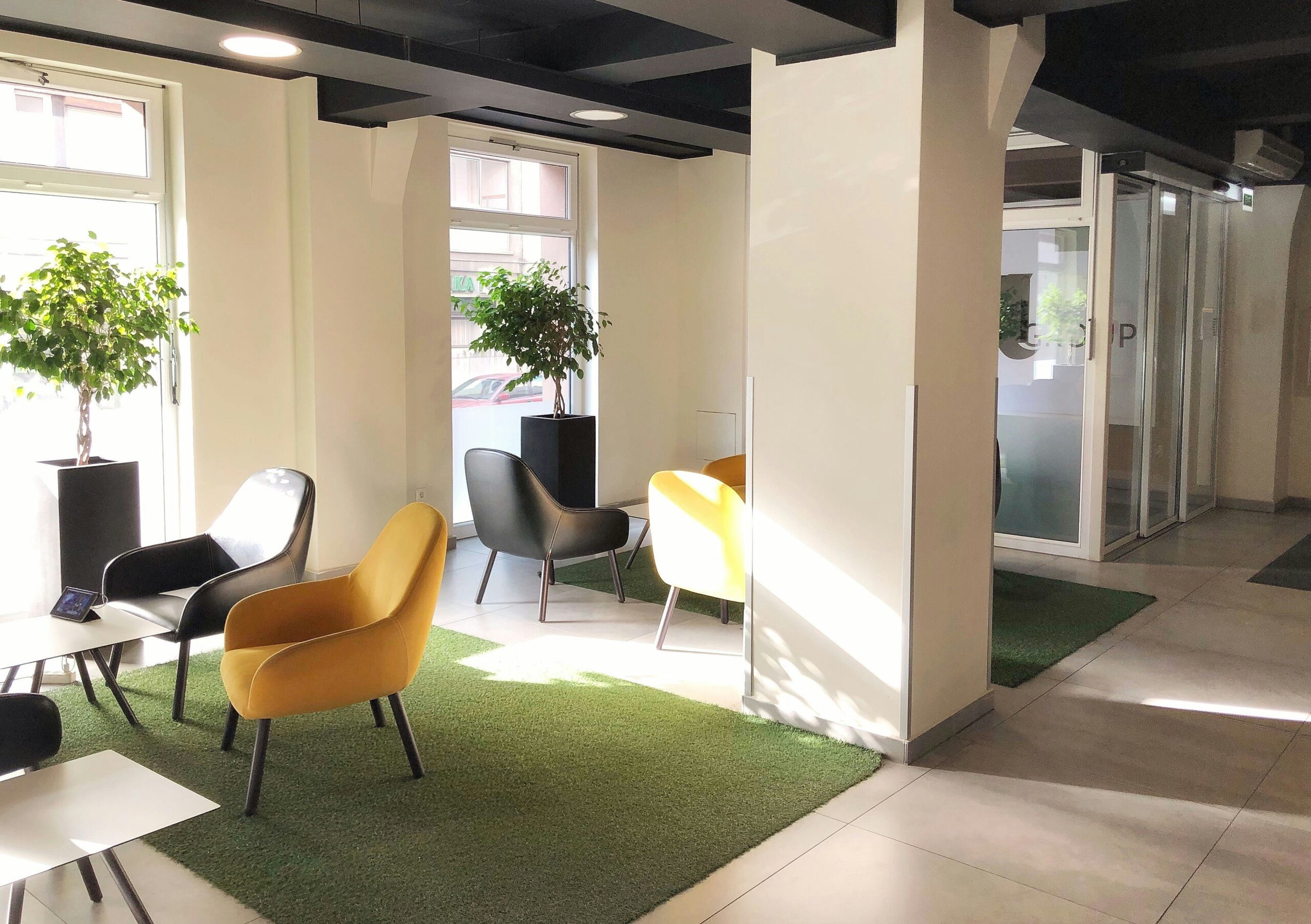
- Hospitality & Resimercial Design: Offices are becoming more comfortable and inviting. Lounge-style seating, acoustic panels, greenery, soft lighting, and natural textures evoke the comforts of home and the aesthetics of upscale hotels.
- Regional Insights:
- Dallas: High emphasis on hospitality-grade finishes and inviting lounges (e.g., AT&T Discovery District).
- Austin: Embracing ergonomic, smart furniture with integrated wellness features.
- Houston: Mixing durable, classic furnishings with biophilic accents.
- San Antonio: Designs draw inspiration from local culture, incorporating art and softer, community-friendly finishes.
2026–2028 (Outlook)
- Smart & Adaptive Furniture: Expect personalized, tech-embedded furniture that adjusts based on employee preferences—desk height, lighting, climate control, and posture tracking.
- Circular & Sustainable Materials: Recycled, rapidly renewable, and biodegradable materials will become standard, driven by LEED/WELL goals and ESG mandates—especially in energy-conscious markets like Houston.
Cubicles vs. Private Offices vs. Hybrid Spaces
2016–2019 (Pre-COVID)
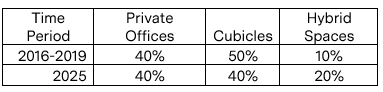
- Dominant Formats: A blend of private offices for management and mid-height cubicles for staff. Open plan configurations were limited, with collaboration largely confined to meeting rooms.
- Texas Market Context:
- Houston: Highly segmented, private office-heavy layouts.
- Austin: Early adoption of open floorplans in startup environments.
- Dallas/San Antonio: Cubicle-heavy but gradually experimenting with open layouts and breakout zones.
2025 (Current Trends)
- Decline of Traditional Cubicles: The “cube farm” is nearly obsolete. Offices now feature open benching, acoustic panels, and semi-enclosed pods to balance collaboration and focus.
- Selective Private Offices: Reserved primarily for HR, legal, or C-suite roles. Most employees now work from shared or unassigned stations.
- Rise of Hybrid Spaces: Offices are segmented by function—not status—with communal work cafés, huddle rooms, and touchdown spaces. Writable walls, acoustic booths, and lounge furniture enhance utility.
- Texas Examples:
- Dallas: Emphasis on team zones and hospitality-style work hubs.
- Austin: Writable surfaces and modular pods are now ubiquitous.
- Houston: Biophilic, mixed-mode environments blending tradition and innovation.
- San Antonio: Art-forward collaborative hubs with flexible seating.
2026–2028 (Outlook)
- Privacy Within Openness**: Offices will further embrace acoustic innovation—sound-masking systems, enclosed pods, and AI-managed noise control.
- Shrinkage of Private Offices: Space allocated to private offices will decline further as companies reassign square footage toward wellness areas, flexible workspaces, and social amenities.
Texas Market Highlights
- Dallas: Leading the state in hyper-collaborative layouts, tech-driven huddle rooms, and welcoming zones. Gensler’s AT&T Discovery District serves as a case study in flexible, hospitality-infused office design.
- Houston: Energy companies are now integrating sustainable design, with spaces that blend legacy formality and contemporary wellness. Examples include Goree’s Real Agave Tequila Lounge and BOKA Powell’s biophilic installations.
- Austin: Tech companies lead in adaptive, modular designs featuring smart furniture, air quality monitoring, meditation spaces, and personalization tools.
- San Antonio: Offices are evolving more gradually but embrace a regional identity—combining modern design with local art, wellness features, and sustainability-forward materials.
Insights from Leading Design Firms
- Gensler: Advocates for hyper-collaboration, tech-enabled flexibility, and environmental stewardship. In Texas, their designs emphasize adaptive zones, sustainability (60% material reuse), and high-impact experiential spaces.
- BOKA Powell: Prioritizes hospitality-led design in its office projects. Known for reducing private office footprints and enhancing communal environments in Dallas and Houston projects.
- Goree Architects: Emphasizes local identity and community connection in design. Their projects in San Antonio and Houston focus on art integration, natural materials, and biophilic planning.
Steve Triolet
Senior Vice President of Research and Market Forecasting
[email protected]
tel 214 223 4008